Washing Machine Not Spinning? Causes & Solutions
Learn why your washing machine stops spinning and discover practical troubleshooting steps before requesting professional repair.
Washing machine not turning on is one of the most common household appliance problems. It is often caused by a loose power connection, an unlocked door, incorrect wash settings, or an internal electrical fault.
This guide explains the most common causes, safe troubleshooting steps you can perform at home, and the warning signs that indicate when professional repair is the best option. By following these practical tips, you can better understand the problem before taking the next step.
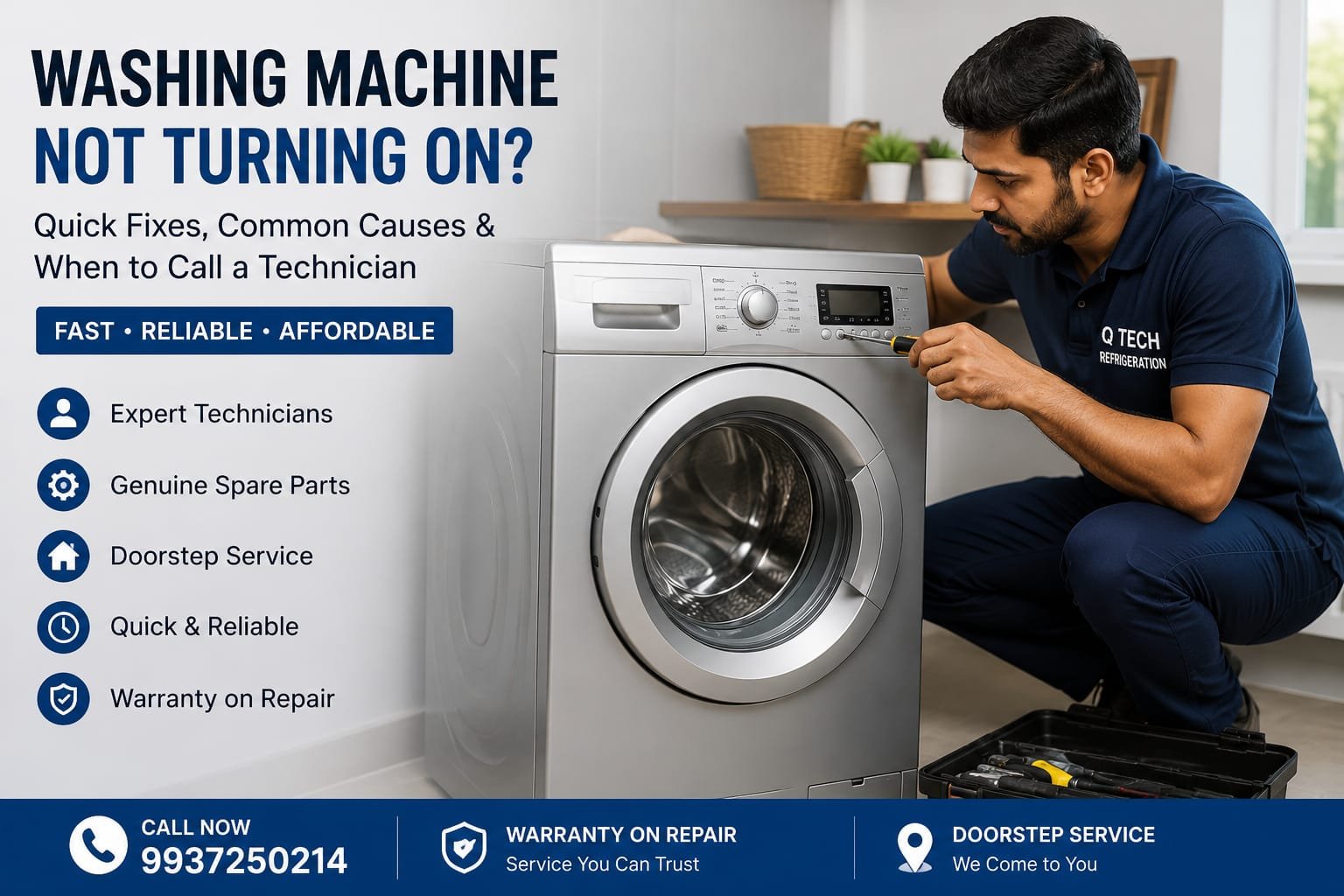
If your washing machine is not turning on, first check the power supply, door lock, wash settings, and water supply. In many cases, the problem is caused by a simple issue that can be identified safely without opening the appliance.
A washing machine not turning on is one of the most common household appliance problems. The control panel may remain blank, the power button may not respond, or the wash cycle may never begin. This issue can affect both front-load and top-load washing machines, regardless of the brand.
Although the problem may appear serious, it is not always caused by a major component failure. A loose power plug, an unlocked door, incorrect wash settings, or a temporary electrical interruption can also stop the machine from starting. Identifying the actual problem early helps avoid unnecessary repairs and makes troubleshooting easier.
Several issues can prevent a washing machine from turning on. Some problems are simple and can be checked safely at home, while others require professional diagnosis. Understanding the most common causes helps you identify the issue more quickly and choose the right solution.
A loose power plug, faulty wall socket, tripped circuit breaker, or damaged power cord can stop the washing machine from receiving electricity.
Most washing machines will not start unless the door or lid is fully closed and the safety lock is engaged correctly.
Features such as Child Lock, Delay Start, or an incorrect wash program may prevent the washing machine from starting normally.
A closed water tap, a blocked inlet filter, or a kinked inlet hose may stop some washing machines from beginning a wash cycle.
A faulty control board, damaged wiring, defective power switch, or another failed internal component can prevent the washing machine from turning on.
Before troubleshooting a washing machine that is not turning on, identify the symptoms carefully. These signs can help determine the possible cause and whether the problem can be resolved safely at home or requires professional repair.
The display remains blank, indicator lights stay off, and the washing machine does not respond when you press the Power button.
The control panel lights up, but pressing the Start button does not begin the selected wash cycle.
An error code appears on the display, indicating a possible electrical fault, door lock problem, or water supply issue.
The washing machine makes a clicking sound when you press the Start button but does not begin the wash cycle.
A burning smell or repeated circuit breaker trips may indicate an electrical fault that requires immediate professional attention.
If your washing machine is not turning on, follow these basic troubleshooting steps before requesting professional repair. These checks are safe to perform, easy to follow, and may help identify the cause of the problem before calling a qualified technician.
Need professional help? Visit our Washing Machine Repair Service page to book a qualified technician.
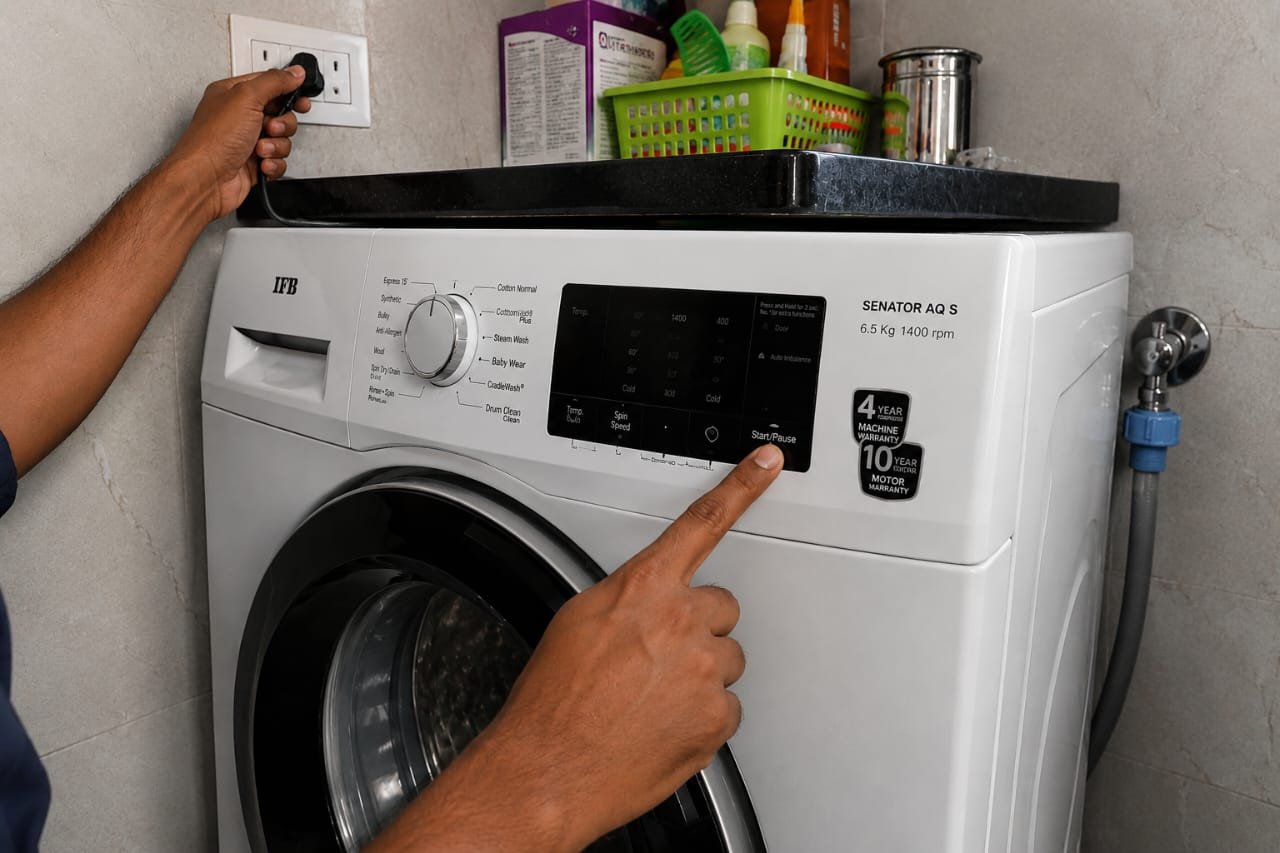
Before troubleshooting a washing machine not turning on, follow these basic safety tips. These precautions help reduce the risk of electrical shock, accidental damage, and personal injury while inspecting the appliance.
For additional electrical safety information related to household appliances, you can refer to the Home Electrical Safety Guide
If your washing machine is not turning on after completing the recommended troubleshooting steps, it is time to contact a qualified technician. Problems such as electrical faults, damaged wiring, a faulty control board, or persistent error codes usually require professional diagnosis. Attempting complex repairs without the proper knowledge or tools may increase the risk of further damage and create potential safety hazards.
A qualified washing machine repair technician can accurately diagnose the fault, replace damaged components safely, and restore your appliance while helping prevent additional damage.
Common causes include power supply problems, a faulty door lock, incorrect wash settings, a damaged power cord, or an internal electrical fault.
Yes. You can safely check the power supply, door lock, water supply, and wash settings before requesting professional repair. However, internal electrical repairs should always be performed by a qualified washing machine repair technician.
This may happen because of an unlocked door, Child Lock, Delay Start, incorrect program selection, or a faulty door lock mechanism.
Yes. A burning smell may indicate an electrical problem. Switch off the appliance immediately, unplug it, and avoid using it until it has been inspected.
If the washing machine remains unresponsive after basic troubleshooting, repeatedly trips the circuit breaker, displays persistent error codes, or produces a burning smell, professional diagnosis is recommended.
Explore more washing machine repair guides to diagnose common problems, learn practical troubleshooting tips, and maintain your washing machine for reliable performance.
Learn why your washing machine stops spinning and discover practical troubleshooting steps before requesting professional repair.
Find the most common reasons why water remains inside the drum and how to fix drainage problems safely.
Learn the common causes of unusual washing machine noises and when professional repair is recommended.
A washing machine not turning on is not always caused by a serious fault. In many cases, simple issues such as a loose power connection, an unlocked door, incorrect settings, or a minor electrical interruption can prevent the appliance from starting.
By following the troubleshooting steps explained in this guide, you can safely identify many common problems before requesting professional assistance. However, if the appliance remains unresponsive, displays repeated error codes, or shows signs of electrical damage, avoid further use and arrange an inspection by a qualified technician.
Q TECH provides professional doorstep washing machine repair services with experienced technicians, transparent pricing, genuine fault diagnosis, and fast same-day support in Bhubaneswar.