Why Is My AC Not Cooling Properly? Top Reasons & Fixes
If your AC is running but the room still feels warm, there could be several reasons behind the cooling problem. In many situations, issues like dirty air filters, low refrigerant levels, temperature control problems, or restricted airflow may affect cooling performance. Identifying the actual cause early may help improve cooling efficiency and prevent expensive repair issues later.
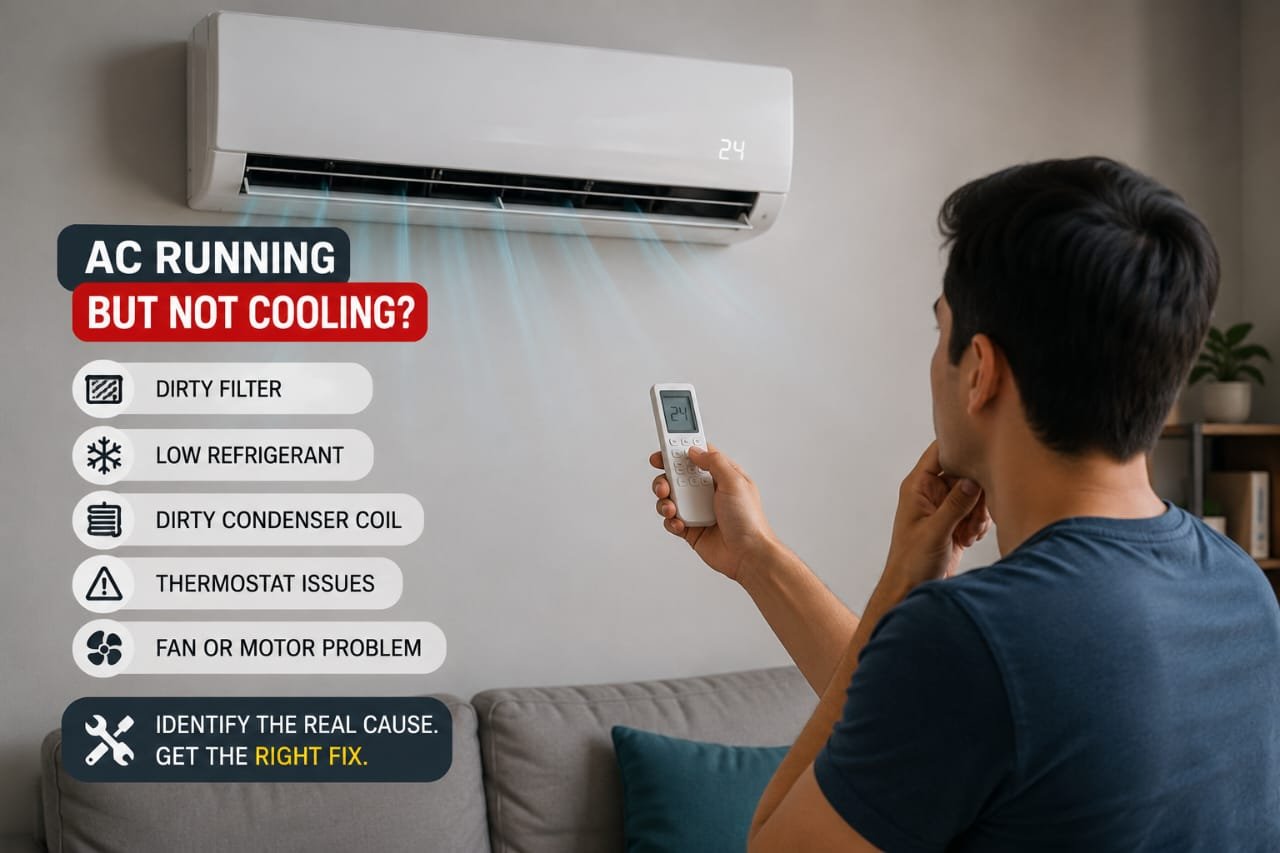
Signs Your AC May Have a Cooling Problem
AC cooling problems may develop gradually over time or appear suddenly during heavy summer usage. In many situations, identifying the early warning signs may help improve cooling performance, reduce unnecessary repair expenses, and prevent larger system issues later.
Weak Cooling Airflow
Your AC may continue running normally, however weak airflow can make the room feel warm, humid, or uncomfortable over time.
Warm Air Instead of Cool Air
If warm air is coming from the vents, there may be cooling control issues, compressor problems, refrigerant leakage, or airflow restrictions inside the system.
Cooling Improves After Cleaning
In some situations, dust buildup on filters or indoor cooling coils may gradually reduce cooling performance and airflow efficiency.
AC Takes Too Long to Cool
Longer cooling cycles may indicate airflow restrictions, dirty condenser coils, low refrigerant pressure, or reduced cooling efficiency.
Top Reasons Why Your AC May Stop Cooling Properly
Poor cooling performance is commonly caused by airflow restrictions, refrigerant issues, maintenance neglect, or cooling control problems. In many situations, identifying these causes early may help prevent higher electricity usage, unstable cooling performance, and expensive repair issues later.
Dirty Air Filters
Clogged air filters may restrict airflow and make it difficult for cool air to circulate properly inside the room. As a result, the AC system may struggle to maintain stable cooling performance and consume more electricity over time.
Low Refrigerant Level
Refrigerant plays an important role in the cooling cycle. If the refrigerant level becomes low because of leakage or internal system issues, the AC may continue running without producing sufficient cooling.
Cooling Control or Sensor Issues
In some situations, cooling problems may occur because of incorrect temperature settings, cooling mode configuration, or indoor temperature sensing issues.
Dirty Outdoor Unit
Dust, debris, or blocked airflow around the outdoor condenser unit may reduce heat transfer efficiency and gradually affect overall cooling performance.
Simple AC Checks You Can Do Before Calling a Technician
Some AC cooling problems may be caused by minor issues that are easy to identify at home. In many situations, performing a few basic checks may help improve airflow, restore cooling performance, and avoid unnecessary service visits.
Clean the Air Filter
Dirty air filters may block airflow and gradually reduce cooling efficiency. Cleaning the filters regularly can help maintain proper air circulation and stable cooling performance.
Check Cooling Settings
Make sure the AC is set to cooling mode and the temperature settings are adjusted properly. In some cases, incorrect cooling settings or remote control configuration may affect cooling performance.
Inspect the Outdoor Unit
Check whether the outdoor condenser unit is blocked by dust, leaves, or surrounding debris. Restricted airflow around the outdoor unit may reduce heat transfer efficiency and gradually affect cooling performance.
Signs Your AC May Need Professional Repair Service
While some cooling problems may be solved through basic cleaning or maintenance, certain AC issues should not be ignored. In many situations, continuing to use the AC without proper inspection may reduce cooling efficiency, affect internal components, and increase repair expenses later.
Simple Maintenance Tips to Improve AC Cooling Performance
Regular AC maintenance not only helps improve cooling efficiency but may also reduce electricity consumption and prevent unnecessary repair issues over time. In many situations, simple maintenance habits can help maintain stable airflow, improve cooling performance, and support long-term system efficiency.
Clean Filters Regularly
Dirty filters may restrict airflow and force the AC system to work harder than normal. Cleaning the filters regularly can help maintain stable cooling performance and improve indoor air circulation.
Keep the Outdoor Unit Clean
Dust, leaves, and surrounding debris around the outdoor condenser unit may affect heat transfer efficiency and gradually reduce cooling performance.
Avoid Extremely Low Temperature Settings
Running the AC continuously at extremely low temperature settings may increase electricity usage and place additional pressure on cooling components over time.
Schedule Professional Service
Professional AC servicing may help identify hidden cooling issues early, improve system performance, and maintain long-term cooling efficiency.
Common Questions About AC Cooling Problems
Here are some common questions people often ask when their AC is not cooling properly, showing weak airflow, or taking longer than usual to cool the room.
Why is my AC running but not cooling the room?
In many situations, this problem may be caused by dirty air filters, refrigerant leakage, cooling control issues, blocked airflow, or outdoor condenser problems.
How often should AC filters be cleaned?
During heavy summer usage, AC filters should usually be cleaned every few weeks to maintain proper airflow, improve cooling efficiency, and reduce dust buildup.
Can low refrigerant levels affect cooling performance?
Yes. Low refrigerant levels may significantly reduce cooling performance and sometimes cause the AC system to run continuously without cooling the room properly.
When should I call a professional AC technician?
Professional inspection may be necessary if you notice refrigerant leakage, burning smells, unusual electrical noises, water leakage, or persistent cooling problems.
Still Facing AC Cooling Problems?
If your AC is still not cooling properly after basic troubleshooting, professional inspection may help identify hidden cooling issues before they affect overall system performance or lead to expensive repairs later.