Common Microwave Oven Problems and Repair Solutions
Microwave ovens may develop heating problems, spark issues, unusual noise, turntable malfunction, and electrical faults over time. Understanding common microwave problems helps improve appliance safety and overall performance.
Common Microwave Oven Problems
Microwave ovens may develop different operational and electrical problems because of internal component wear, voltage fluctuations, overheating, or continuous appliance usage over time.
Microwave Not Heating Food
Heating failure may occur because of magnetron faults, capacitor problems, or internal electrical damage.
Microwave Spark Problem
Sparking inside the microwave may happen because of damaged waveguides, metal contact, or burnt components.
Turntable Not Rotating
Turntable movement problems may develop because of motor malfunction or damaged rotating components.
Control Panel Not Responding
Touch panel and control system problems may affect microwave operation and appliance functionality.
Microwave Oven Not Heating Food Properly
Microwave heating problems may occur because of magnetron malfunction, capacitor failure, damaged diode components, or internal electrical faults affecting appliance performance.
In many cases, the microwave may appear operational from the outside while failing to generate proper heat during cooking cycles.
Magnetron Malfunction
A damaged magnetron may prevent the microwave from producing sufficient heat during operation.
Capacitor or Diode Failure
Internal electrical component failure may interrupt proper microwave heating functionality.
Voltage Fluctuation Damage
Unstable voltage conditions may affect microwave electrical systems and heating performance.
Microwave Oven Spark Problem
Sparking inside a microwave oven may happen because of damaged waveguide covers, metal objects inside the appliance, burnt food particles, or internal electrical component issues.
Continuous sparking during operation may affect appliance safety and increase the risk of internal microwave damage over time.
Damaged Waveguide Cover
A burnt or damaged waveguide cover may create visible sparks during microwave operation.
Metal Objects Inside Microwave
Metal utensils or foil materials may generate sparks because of microwave energy reflection.
Burnt Food Residue
Food particles and grease buildup inside the microwave cavity may increase sparking risk during heating cycles.
Microwave Turntable Not Rotating Properly
Microwave turntable movement problems may occur because of motor malfunction, damaged roller guides, improper tray placement, or internal electrical connection issues.
A non-rotating turntable may affect even heat distribution and reduce microwave cooking performance during operation.
Turntable Motor Failure
A damaged turntable motor may stop tray rotation during microwave cooking cycles.
Broken Roller Guide
Damaged or misaligned roller guides may interrupt smooth tray movement inside the microwave oven.
Improper Tray Placement
Incorrect glass tray positioning may affect turntable balance and normal rotation functionality.
Microwave Oven Maintenance Tips
Regular microwave maintenance helps improve appliance safety, reduces internal damage risk, and supports better cooking performance over time.
Clean Food Residue Regularly
Removing grease and food particles helps reduce odor, sparking risk, and internal microwave contamination.
Avoid Using Metal Objects
Metal utensils and foil materials may damage internal microwave components and create sparking issues.
Inspect Door Seal Condition
Damaged door seals may affect microwave safety and reduce appliance operational efficiency.
Use Stable Power Supply
Voltage fluctuations may affect microwave electrical components and heating performance over time.
Signs You Need Professional Microwave Repair Service
Certain microwave problems may require professional inspection and repair support to prevent electrical damage and appliance safety risks.
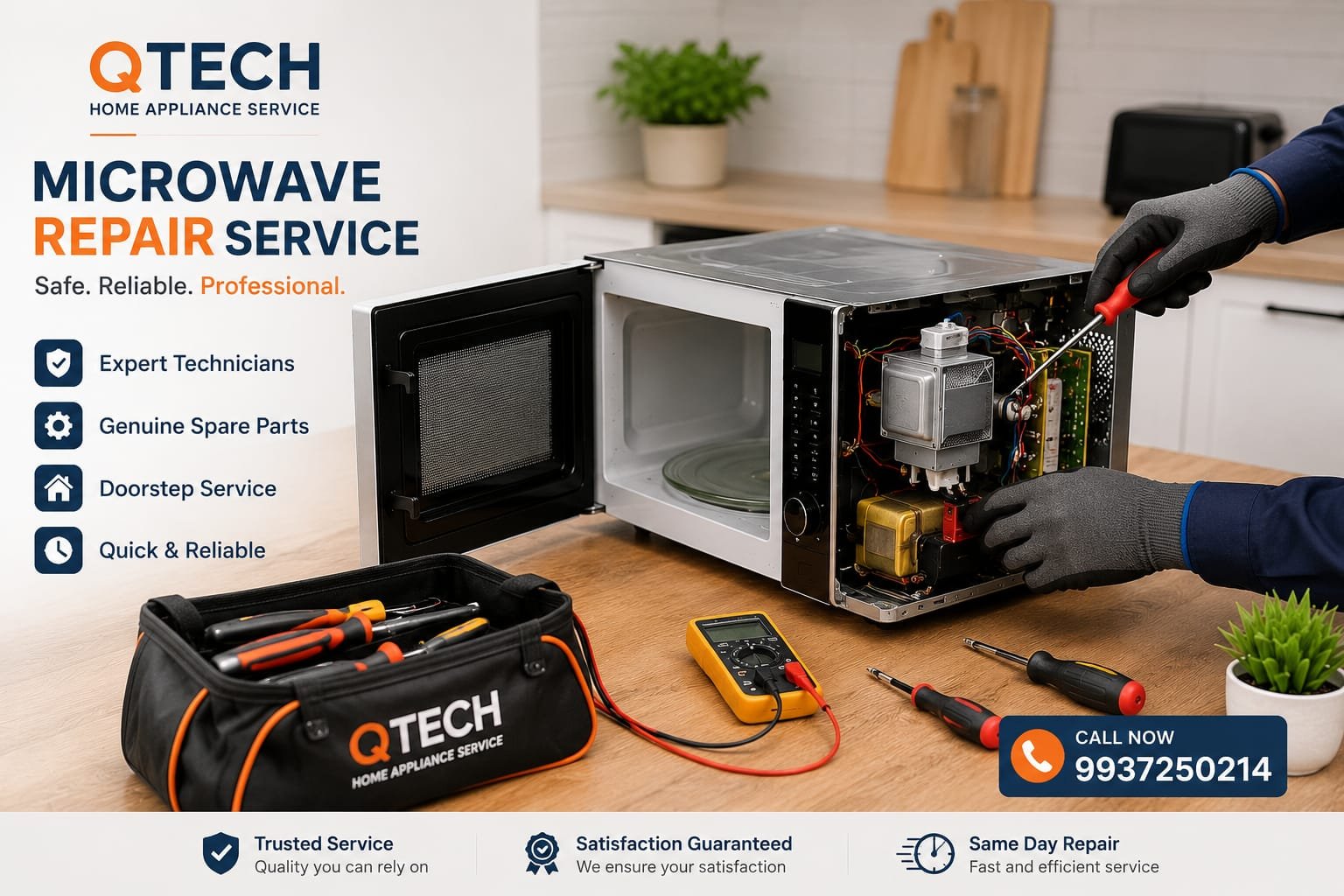
Microwave Suddenly Stops Working
Complete operational failure may indicate electrical component damage or internal circuit problems.
Burning Smell During Heating
Unusual burning smell may signal overheating or internal microwave electrical faults.
Repeated Sparking Problems
Continuous sparking during operation may require immediate professional inspection and repair support.
Related Microwave Repair Service & Support
Explore professional microwave repair support, appliance troubleshooting information, and related service assistance.
Frequently Asked Questions
Why is my microwave not heating food properly?
Heating problems may occur because of magnetron failure, capacitor issues, or internal electrical faults.
Why does my microwave create sparks?
Sparking may happen because of metal objects, damaged waveguide covers, or burnt food residue inside the appliance.
Is microwave sparking dangerous?
Continuous sparking may affect appliance safety and should be inspected properly before further usage.
How often should microwave cleaning be done?
Regular cleaning helps maintain appliance hygiene, reduces odor, and prevents internal residue buildup.